
Digital, UI/UX, Website
Happytactic
- Client
- Happytactic
- Industry
- Logistics & FreightTech
- Services
- Product & UI/UX DesignFull-Stack DevelopmentIntegrations & InfrastructureWebsite Design
- Live Page
- Open Project
Case Study
An MC number in. A fraud-risk verdict out, in minutes.
Freight fraud costs the logistics industry hundreds of millions of dollars a year, and brokers were fighting it with phone calls and spreadsheets. We designed and built Happytactic end to end — a multi-tenant SaaS platform that turns a carrier's MC number into a green, yellow or red risk decision in under five minutes, then manages the load itself through an integrated real-time TMS. The product, the infrastructure and the website: one engagement.

01
The Challenge
Freight fraud — fake carriers, hijacked dispatcher identities, double-brokered loads — costs the US logistics industry hundreds of millions of dollars a year. The defence against it has barely changed in decades: brokers verify carriers by hand, calling phone numbers, checking government databases and emailing insurance agents. Hours of work for every carrier, against fraudsters who only need to be missed once.
Happytactic exists to answer the two questions every broker keeps asking: is this carrier legitimate, and is my load delivered? The brief to us was the whole answer — design and build the product application, the infrastructure behind it and the website in front of it, as one team and one engagement.
02
The Approach
We built the platform end to end: data model, API, frontend, integrations, infrastructure and the marketing site. One codebase — Next.js and NestJS in a TypeScript monorepo on PostgreSQL and Redis — and one deployment pipeline, running as containers on self-hosted infrastructure without cloud-vendor lock-in.
The hard part of a product like this is data. The platform draws on FMCSA, the US federal carrier registry, alongside an industry carrier-data provider through deep data integrations, and coordinates Twilio voice and SMS, Stripe billing and insurance-data webhooks. Every source is queried in parallel, so a verification never waits in line.
Integration-heavy engineering
Federal FMCSA data, an industry carrier-data provider, Twilio voice and SMS, Stripe billing and insurance webhooks — 7+ integrations behind a single risk decision.
Security first
Multi-tenant data isolation, token-gated portals, hash-chained audit trails, two-factor authentication and tiered rate limiting, designed in from the first commit.
Shipped in phases
Verification engine first, then carrier portals, then TMS modules — each phase deployed to production and used by real brokers before the next began.
Underneath it all sits a hard quality gate: 1,000+ automated tests across API and web, maintained throughout development rather than bolted on at the end.
03
The Solution
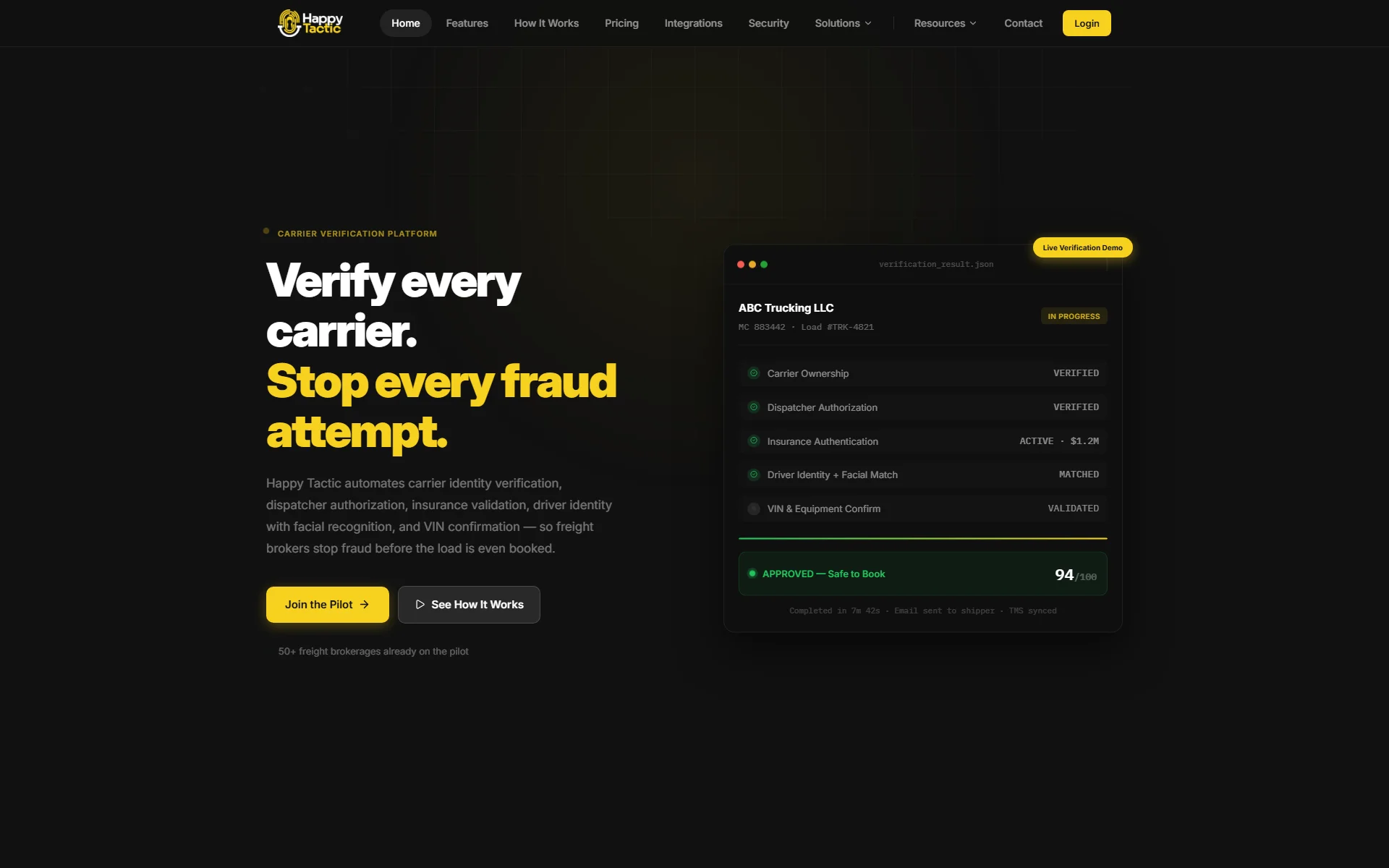
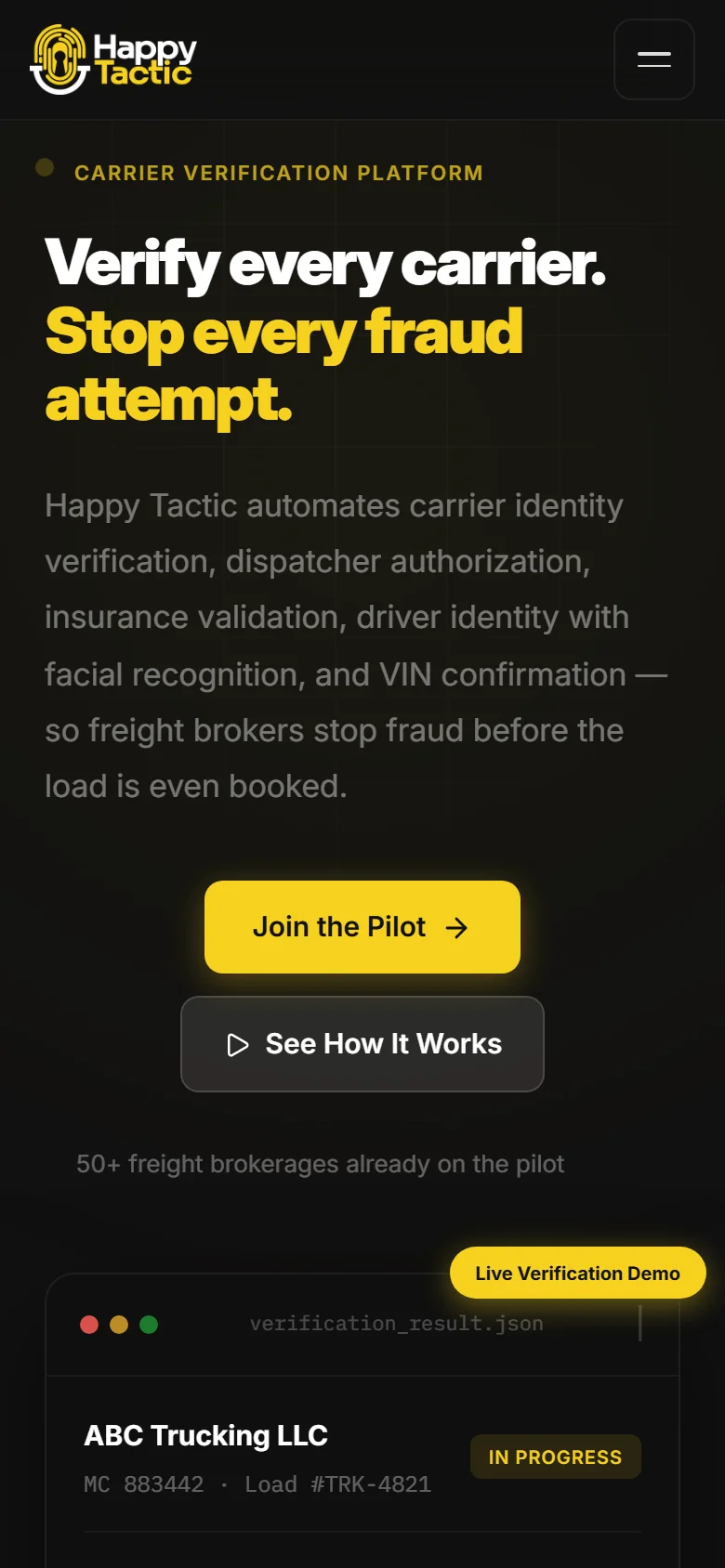
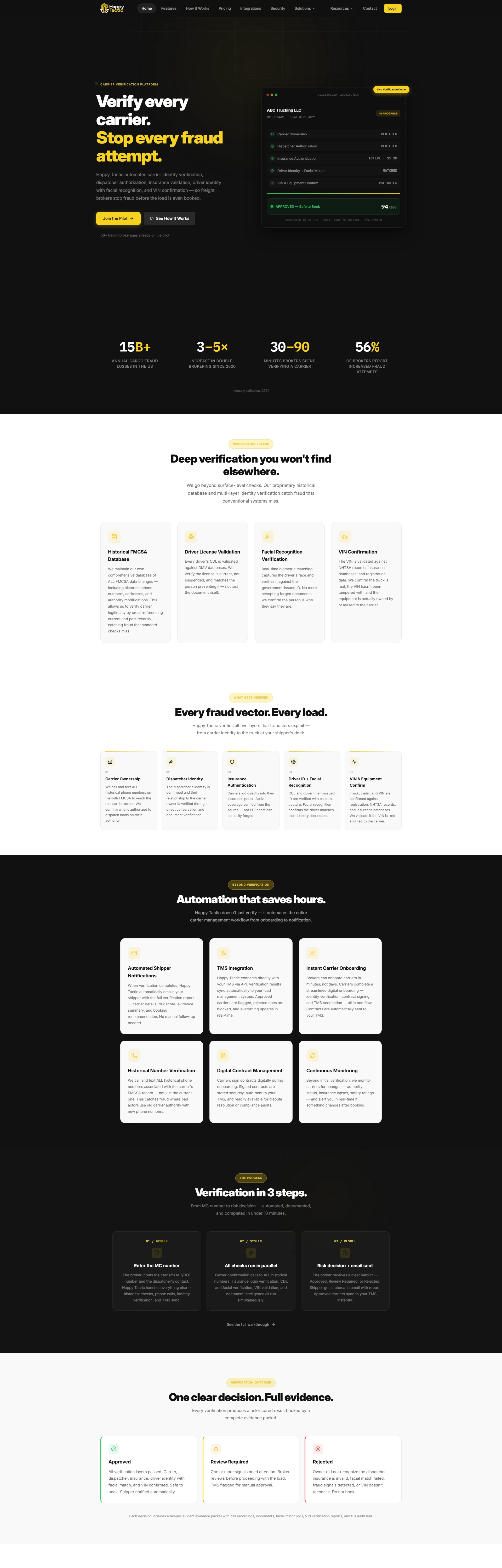
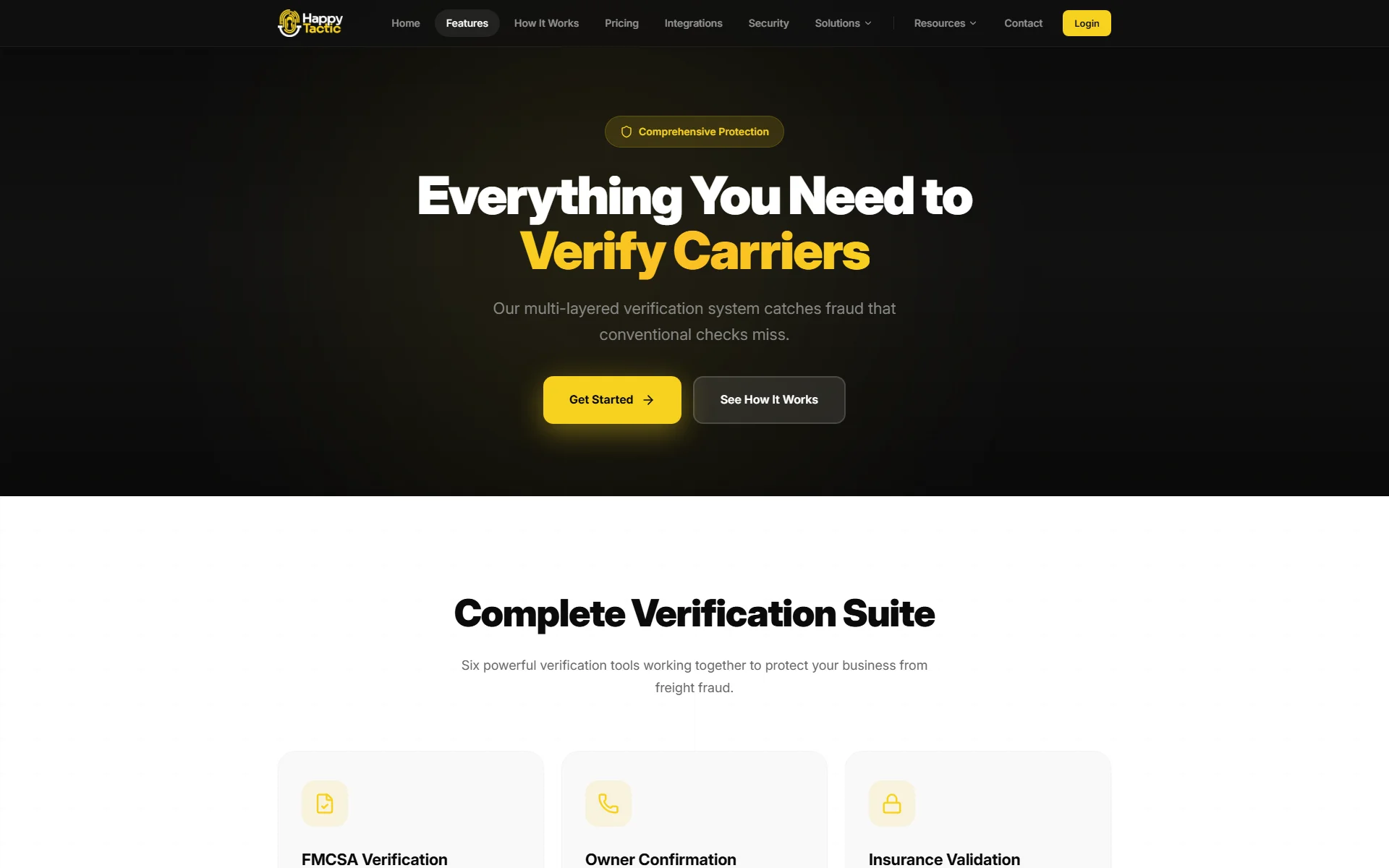
A broker enters an MC or DOT number. The platform pulls live federal and industry data in parallel, runs 30+ automated fraud cross-checks — document forensics that flag photo-editing software and implausible capture locations, image-quality analysis on driver documents, dispatcher cross-referencing against historical carrier data, and change-log monitoring on phone numbers, addresses and authority — then returns a green, yellow or red decision with a per-signal breakdown. What used to take hours of phone calls completes in under five minutes. And the watch never really ends: carrier data is re-collected over time, diffed against previous snapshots, and material changes become alerts brokers actually see.
The carrier's side is deliberately frictionless. Owners authorize their dispatchers, confirm insurance, upload documents and sign contracts through secure token links — no account, no password. Identity is confirmed by automated voice calls and SMS passcodes, including callbacks to a carrier's previous phone numbers when contact details change: the classic hijacked-identity tell. Contracts run through an e-signature flow we built in-house, with a hash-chained, tamper-evident audit trail and evidence PDFs scoped to the owning broker.
On top sits a full transportation management system. Loads are created, tendered to verified carriers via magic links, tracked from pickup to delivery, invoiced and settled; a real-time dispatch board streams updates live to every dispatcher's browser. CRM, fleet and driver management, and accounts-receivable reporting round out 17 individually toggleable modules — all of it multi-tenant and white-label, each brokerage running under its own branding with Stripe-powered billing.
04
The Impact
-
Minutes, not hours. Carrier verification that used to mean hours of manual phone calls now completes in under five minutes, backed by a complete evidence packet.
-
Depth as the moat. 30+ fraud cross-check signals, 30+ backend API modules, 6 user roles and 7+ third-party integrations in a fully multi-tenant architecture — coverage a manual process can't match.
-
Engineered to hold. 1,000+ automated tests across API and web, kept as a hard gate throughout — a platform brokers trust with their freight, tested like one.
-
One engagement, everything shipped. The product application, the infrastructure and the website, designed, built and deployed by a single team — and delivered in production phases used by real brokers along the way.

Collaboration
Got a project?
Let's talk.
We're a team of creatives who are excited about unique ideas and help companies to create amazing identity by crafting top-notch UI/UX.