

"How much does a website cost?" is the first question we hear on almost every discovery call — and the honest answer is a range, not a number. In 2026, a professionally designed business website typically lands between $1,500 and $30,000+, depending on what you're building, who builds it, and how much of the work is genuinely custom.
This guide breaks that range down properly: real prices by project type, what actually drives the cost up or down, how agency / freelancer / DIY-builder options compare, and the red flags to watch for in suspiciously cheap quotes. If you'd rather talk through your specific project, our website design service page explains exactly how we scope and price this work.
What does a website actually cost in 2026?
Here are the ranges we see across the market — and quote against — in 2026. US figures reflect established agencies and senior freelancers; India figures reflect quality-focused studios (not the race-to-the-bottom listings).
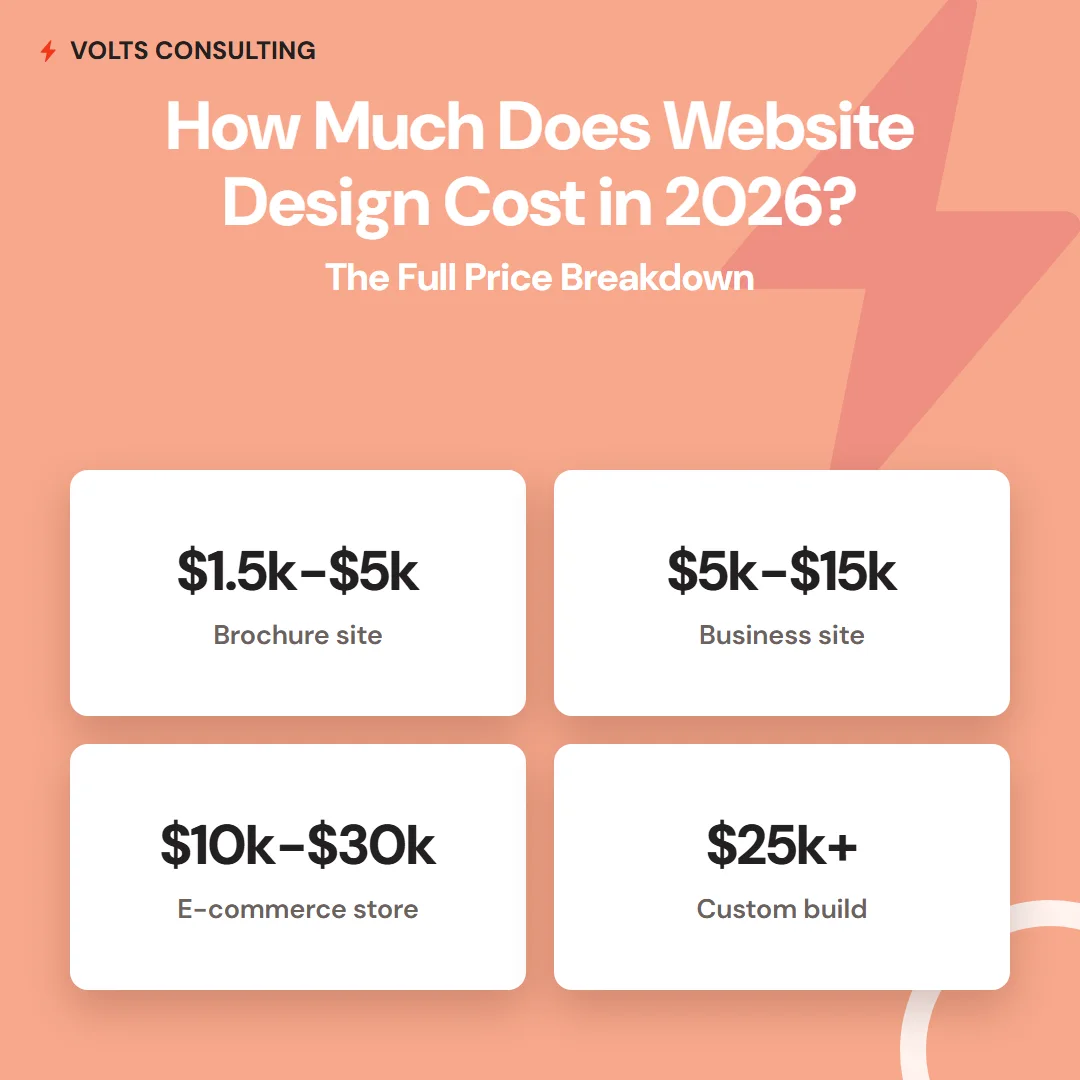
| Project type | Typical US price | Typical India price | Timeline |
|---|---|---|---|
| Brochure site (3–6 pages) | $1,500 – $5,000 | ₹40,000 – ₹1.5L | 2–4 weeks |
| Business site (8–20 pages, CMS, forms) | $5,000 – $15,000 | ₹1.5L – ₹5L | 4–8 weeks |
| E-commerce store | $10,000 – $30,000 | ₹3L – ₹10L | 6–12 weeks |
| Custom build / web application | $25,000+ | ₹8L+ | 10+ weeks |
Two notes on reading this table honestly:
- The bottom of each range assumes a template-driven design with light customization. Fully custom design — layouts, illustration, motion, brand work — starts around the middle of each range.
- Prices cluster at the extremes. The middle of the market has thinned out: you'll meet $500 quotes and $20,000 quotes for what sounds like the same site. More on why below.
What drives the price up or down?
Every quote is ultimately a function of hours × seniority, so the factors that move the price are the ones that add skilled hours:
- Page count and unique layouts. Ten pages that share three layouts cost far less than ten genuinely different pages.
- Custom design vs template. A designer starting from your brand and your users, rather than a theme, is the single biggest cost multiplier — and usually the biggest quality multiplier.
- Content. Who writes the copy? Who supplies photography? "Client provides content" is where cheap projects go to stall for months.
- Integrations. CRM, booking, payments, multi-step forms, email automation — each is real engineering work.
- Performance and SEO engineering. Passing Core Web Vitals, structured data, clean semantic markup. Many cheap builds skip this entirely, and it shows up later as an invisible site.
- Ongoing ownership. Who maintains it? A site nobody can update quietly loses value every month (we covered this in website maintenance strategies).
Agency vs freelancer vs DIY builder — which should you pick?
| Option | Realistic cost | Best when | Watch out for |
|---|---|---|---|
| DIY builder (Wix, Squarespace, Shopify) | $200 – $500/yr + your time | You're validating an idea and need something live this week | Your time isn't free; design ceilings; harder SEO |
| Freelancer | $1,000 – $8,000 | Well-defined small projects with one skill at the center | Availability risk; you become the project manager |
| Agency | $5,000 – $30,000+ | Strategy, design, build, and SEO need to work as one system | Wide quality variance — vet the portfolio hard |
There's no universally right answer here. A brand-new food truck should probably start on a builder. A firm whose next client is worth five figures shouldn't gamble its credibility on one. The switch point comes when the website stops being an online business card and starts being how customers judge whether you're the real thing.

Why do quotes for the same website vary so much?
Across the projects we've scoped in the past twelve months, the gap between the cheapest and the most expensive quote a business showed us for the same brief averaged roughly 6×. Same requirements document, wildly different numbers. The variance comes from what's quietly left out — and that's where cheap quotes deserve scrutiny:
- No discovery phase. If nobody asked about your customers, competitors, or goals, you're buying page assembly, not design.
- "Unlimited pages" or "unlimited revisions." Unlimited anything means the unit of work has no defined value.
- No performance or SEO commitments. Ask for Lighthouse scores of sites they shipped. Silence is an answer.
- You don't own the result. Proprietary builders, licensed themes, or hosting lock-in that makes leaving expensive.
- A portfolio that's all mockups. Concepts on Dribbble aren't shipped websites with real constraints.
A $1,000 site and a $10,000 site are usually not the same product at different prices — they're different products that happen to share a name.
What do ongoing costs look like after launch?
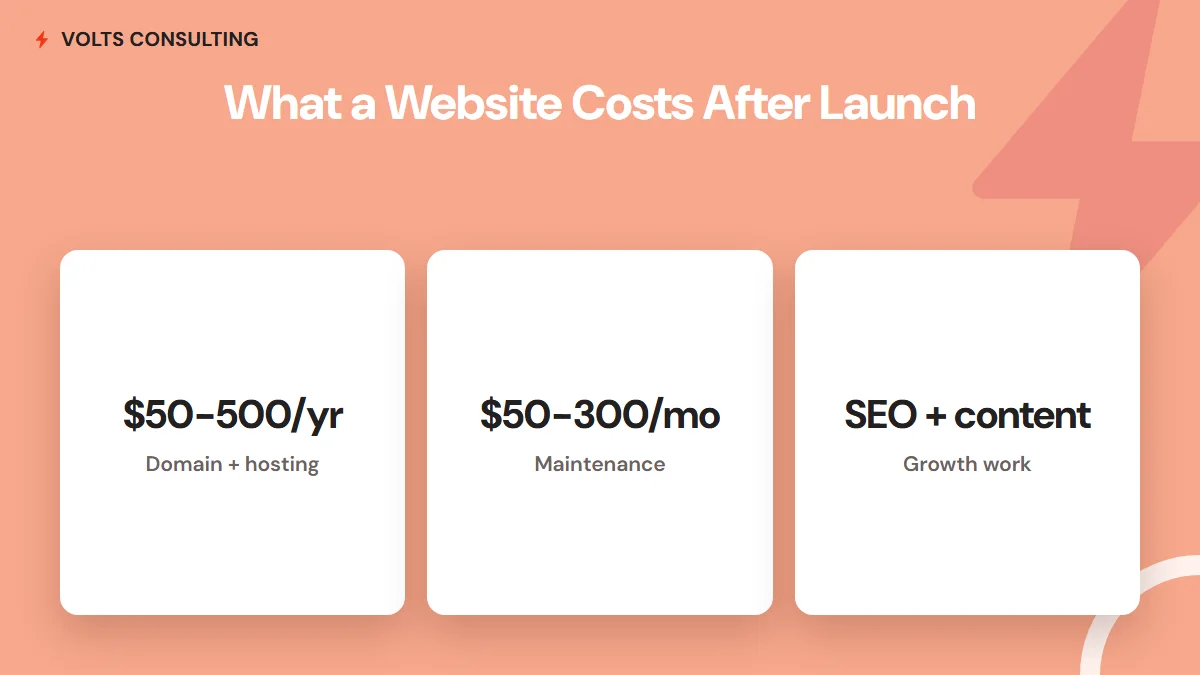
Budget for the site as a system, not a one-time purchase:
- Domain + hosting: $50 – $500/yr for most business sites
- Maintenance and updates: $50 – $300/mo if handled for you (security, backups, content changes)
- Growth work: SEO, content, conversion improvements — the difference between a site that converts and one that just exists
If a proposal doesn't mention any of this, the launch price is hiding the real total.
How do you budget without overpaying?
- Anchor to the value of one customer. If your average client is worth $3,000, a $6,000 site pays for itself with two leads it wins you.
- Fix the scope, not just the price. A precise page list, content plan, and integration list makes quotes comparable — and honest.
- Pay for the parts that compound. Strategy, design quality, and performance keep producing returns; bells and whistles don't.
- Check the builder's own site. An agency's website is its most honest portfolio piece. (Ours is — we rebuilt it from scratch and treat it as proof of work.)
If you want a real number instead of a range, book a free strategy call — we'll scope your project and give you a fixed quote, usually within two working days.
Frequently asked questions
How much should a small business expect to spend on a website in 2026? For a professionally designed site that positions you credibly, plan on $3,000 – $10,000 in the US, or ₹1L – ₹4L in India. Below that, you're choosing between templates and compromises — which is fine, as long as it's a deliberate choice.
Why are Indian web design prices so much lower? Lower operating costs, not necessarily lower skill. The catch is variance: the best Indian studios deliver world-class work at a fraction of US rates, while the cheapest listings deliver almost nothing. Vet portfolios and live sites, not price lists.
Is a website builder good enough for my business? If your customers don't research you online before buying, possibly yes. If they compare you against competitors in a browser tab, the design ceiling and performance limits of builders become a real cost — just one that arrives invoice-free.
How long does a website project take? Two to four weeks for a small brochure site; six to twelve weeks for business and e-commerce sites. Content readiness is the most common delay — decide who writes what before the project starts.